
What Happens to Your Leads After 5 Minutes of No Response?
The science of lead decay reveals a brutal truth: every minute you wait to respond, your chances of converting that lead drop exponentially. Here's exactly what happens—and how to stop the bleeding.
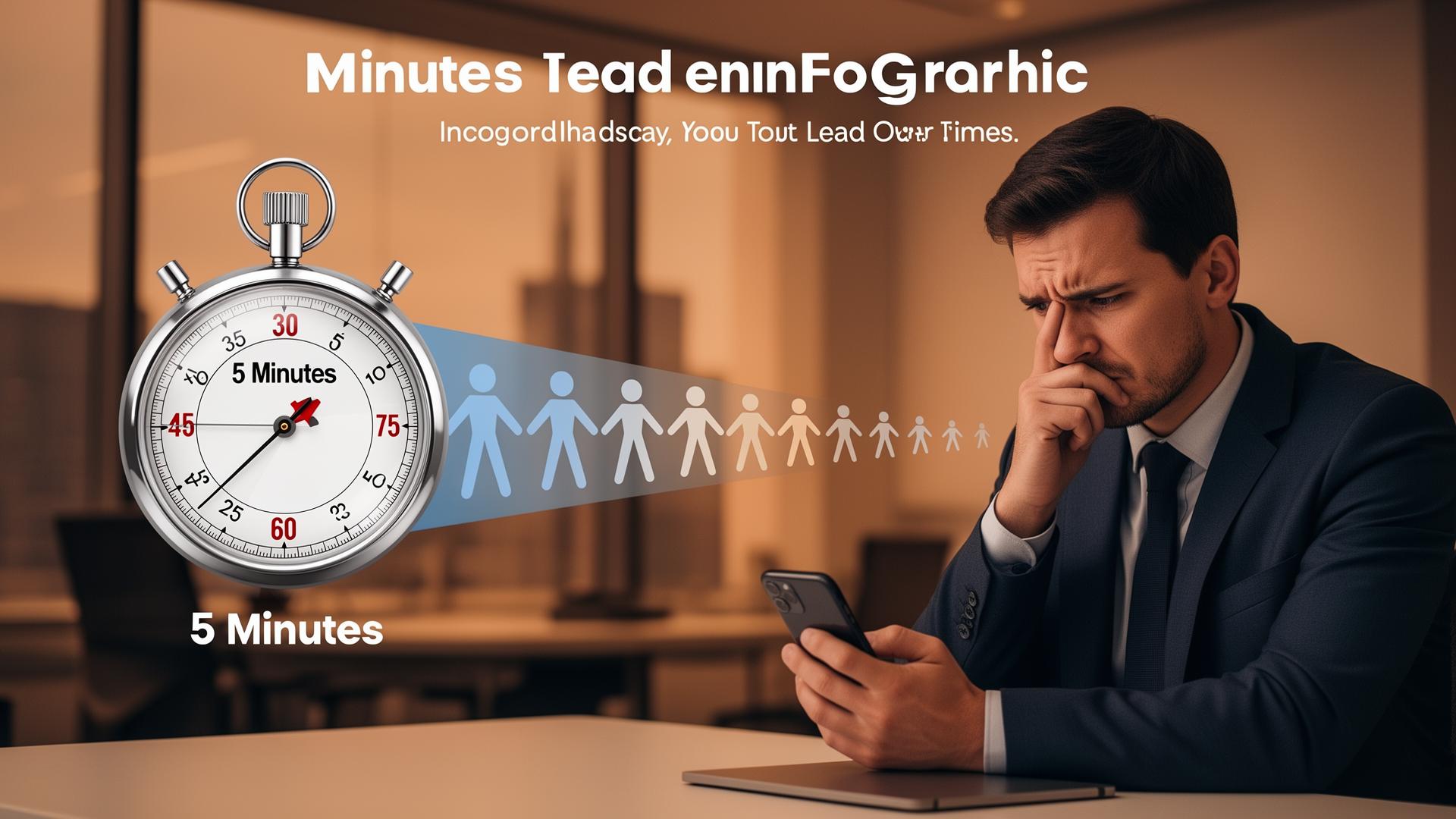
The 5-Minute Cliff: Where Leads Go to Die
Picture this: A homeowner needs their AC fixed. It's July. It's 95 degrees. They Google "HVAC repair near me" and click on three businesses. They fill out a form on your site at 2:15 PM and immediately call the second business.
The second business answers. They schedule an appointment for tomorrow. The homeowner feels relieved—problem solved.
You respond to their form at 3:45 PM. You never hear back.
The Brutal Math
That 90-minute delay cost you a $400-$1,200 service call, plus the lifetime value of a customer who might have called you for every HVAC need for the next 20 years. Total loss: potentially $15,000-$50,000 from one slow response.
The Lead Decay Timeline
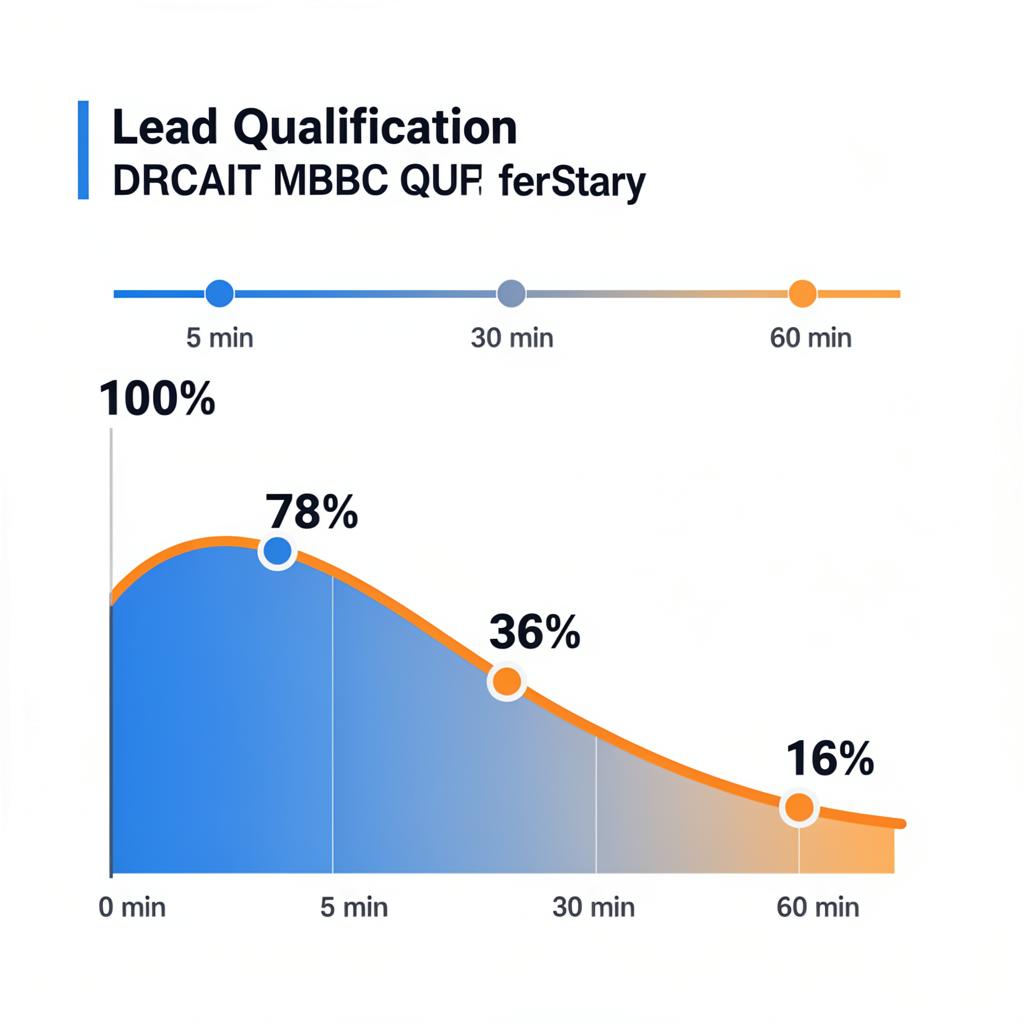
Minutes 0-5
The Golden Window
- Lead is actively engaged and motivated
- Problem is top-of-mind and urgent
- 21x more likely to qualify vs 30-min response
- 78% first-responder conversion advantage
Minutes 5-15
The Danger Zone
- Lead starts contacting competitors
- Urgency begins fading
- Qualification drops to 62%
- First competitor response likely received
Minutes 15-30
The Cooling Period
- Lead likely talking to competitor
- Emotional urgency significantly reduced
- Qualification drops to 36%
- Price becomes primary decision factor
Minutes 60+
The Point of No Return
- Lead likely already booked with competitor
- Original problem may feel less urgent
- Qualification drops to 16%
- You're now competing on price alone
What Your Leads Do While Waiting for You
Lead behavior studies reveal a predictable pattern of actions taken while waiting for a response. Understanding this timeline shows exactly where you lose them.
The Lead's Journey (While You're Not Responding)
Submits form/calls your business
Excitement and urgency at peak. Actively waiting by phone.
Starts browsing other options
"Let me check a few more while I wait..."
Contacts second business
Fills out another form or makes another call. Now comparing.
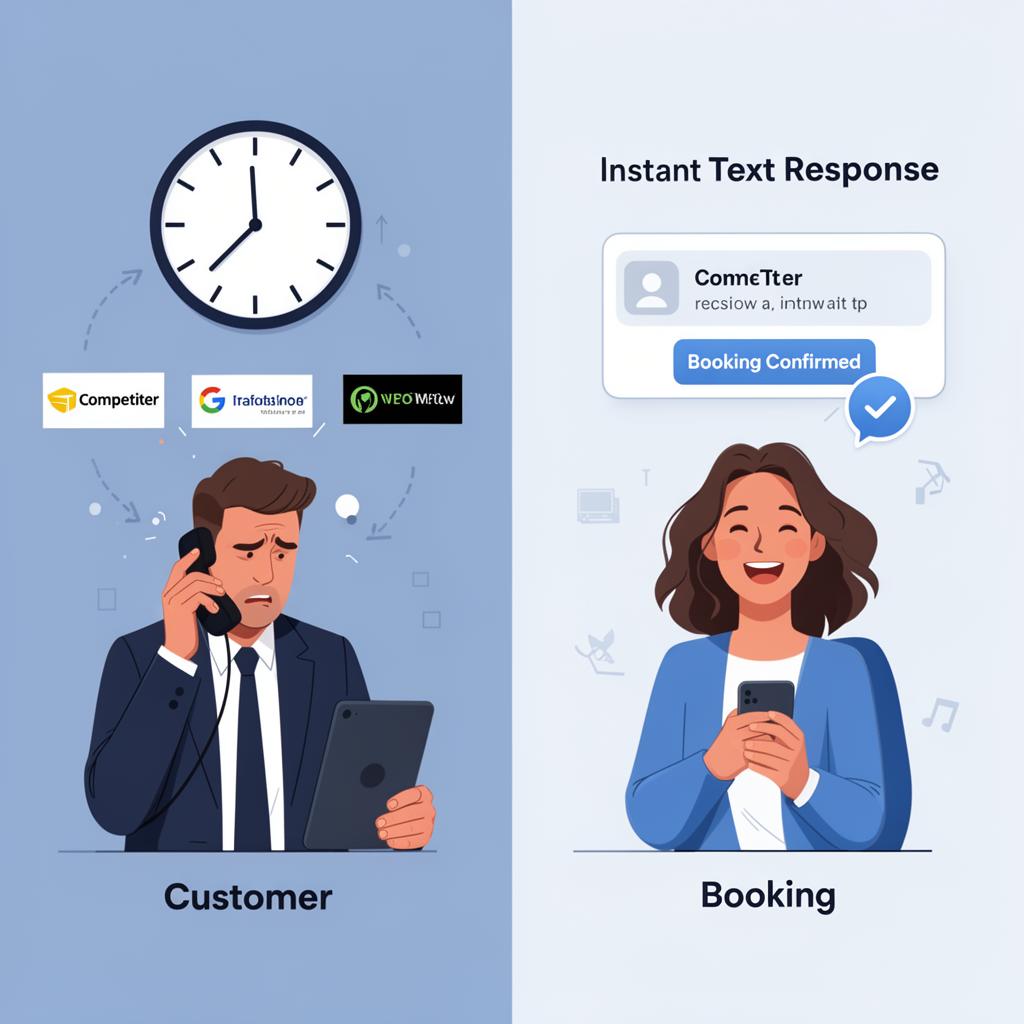
Competitor responds first
Relief! Problem feels solved. Emotional commitment shifts.
Schedules with competitor
Appointment booked. Your form submission is forgotten.
You finally respond
"Thanks for reaching out!" → No reply. Lead is gone forever.
Industry Response Time Reality Check
Most businesses dramatically overestimate how fast they respond. Here's how different industries actually perform—and what top performers do differently.
| Industry | Avg Response | Top 10% | Conversion Gap |
|---|---|---|---|
| HVAC & Plumbing | 4.2 hours | 8 minutes | +340% |
| Home Services | 6.7 hours | 12 minutes | +285% |
| Medical/Dental | 2.1 hours | 5 minutes | +220% |
| Auto Services | 3.8 hours | 10 minutes | +195% |
| Salons & Spas | 5.3 hours | 3 minutes | +410% |
| Legal Services | 8.4 hours | 15 minutes | +175% |
The Top 10% Secret
Businesses in the top 10% for response time aren't necessarily bigger or better-staffed. They use automation for instant acknowledgment while humans follow up within 15 minutes.
The Psychology of Why Speed Wins
Peak Motivation Theory
When someone reaches out, they're at peak motivation. This psychological state has a half-life of about 5-10 minutes. Every minute that passes, rational thinking replaces emotional urgency.
"I need this fixed NOW" becomes "Maybe I'll get a few quotes" becomes "I'll deal with this later"
Commitment Escalation
The first business to engage starts the commitment escalation process. Once a prospect invests time talking to you, they're psychologically less likely to start over with someone else.
5 minutes invested = 35% less likely to shop around
Reciprocity Principle
Fast response creates a sense of obligation. When you respond quickly, prospects feel you've prioritized them—and they reciprocate with their attention and loyalty.
Speed = Respect = Trust = Conversion
Decision Fatigue
Researching service providers is exhausting. The first good option that responds becomes the "good enough" solution. Prospects want to stop searching—give them a reason to stop.
First responder wins because they end the search
Key Challenges We Solve
Discover how Lead Response addresses your most critical business pain points
💡 Tip: Tap each card to flip between problem and solution
Calculate Your Response Time Cost
Use this formula to calculate what slow response time costs your business:
Monthly Lost Revenue =
(Monthly Leads × Decay Rate × Avg Job Value) - Current Conversions
With 5-minute response: Only 22% decay instead of 64%. That's $115,200 recovered annually from the same leads.
Frequently Asked Questions
What's the scientific basis for the 5-minute rule?
▼
The 5-minute rule comes from Harvard Business Review research showing leads are 21x more likely to qualify when contacted within 5 minutes versus 30 minutes. InsideSales.com found that 78% of sales go to the first responder. After 5 minutes, lead 'temperature' drops exponentially as prospects continue researching competitors.
How do I respond in 5 minutes when I'm with customers?
▼
Use automated response systems: instant text-back for missed calls, auto-responders for form submissions, and chatbots for website visitors. The goal isn't to have a full conversation instantly—it's to acknowledge the lead and set expectations. 'Thanks for reaching out! We received your message and will call you within 15 minutes' keeps leads warm.
Does response time matter for high-value services?
▼
It matters MORE for high-value services. When customers are about to spend $5,000+ on home remodeling, HVAC, or medical procedures, they're researching multiple providers. Fast response signals professionalism and reliability—qualities that matter when the stakes are high. The business that responds first also frames the conversation.
What if I respond fast but competitors have better pricing?
▼
First responders win 78% of sales regardless of pricing. Why? Because most customers don't want to keep shopping—they want to solve their problem. If you provide good service at a fair price AND you're first, they're unlikely to continue comparing. Speed reduces price sensitivity by 40% according to sales research.
How do I track my current response time?
▼
Start by auditing the last 20 leads: when did the inquiry come in, when did you respond? Most CRM systems track this automatically. Google Business Profile shows average response time for messages. For calls, check your missed call logs against when you returned them. Most businesses are shocked to find their actual response time is 10x longer than they assumed.
What's a realistic response time goal for a small business?
▼
Under 5 minutes for automated acknowledgment, under 15 minutes for human follow-up during business hours. After hours, automated responses should set expectations: 'We received your message at 9 PM and will call you by 9 AM tomorrow.' This still beats competitors who don't respond until the next afternoon.
Do automated responses feel impersonal?
▼
Personalized automated responses feel more professional than delayed human responses. Include the customer's name, acknowledge their specific inquiry, and set clear expectations. 'Hi Sarah, thanks for asking about our bathroom remodeling services. Our design team will call you within 15 minutes to discuss your project.' That's personal AND instant.
What happens to leads between 5 minutes and 1 hour?
▼
Lead qualification drops on a curve: 100% at 0 min, 78% at 5 min, 62% at 10 min, 36% at 30 min, 16% at 60 min. Each passing minute, leads are contacting competitors, reading reviews, or losing the urgency that made them reach out. After 1 hour, you're essentially starting from scratch—competing on price rather than speed.
Stop Losing Leads to Slow Response
Our automated response system ensures every lead gets acknowledged in under 30 seconds—while you focus on serving customers.